My Personal Understanding Of Agricultural Sustainability
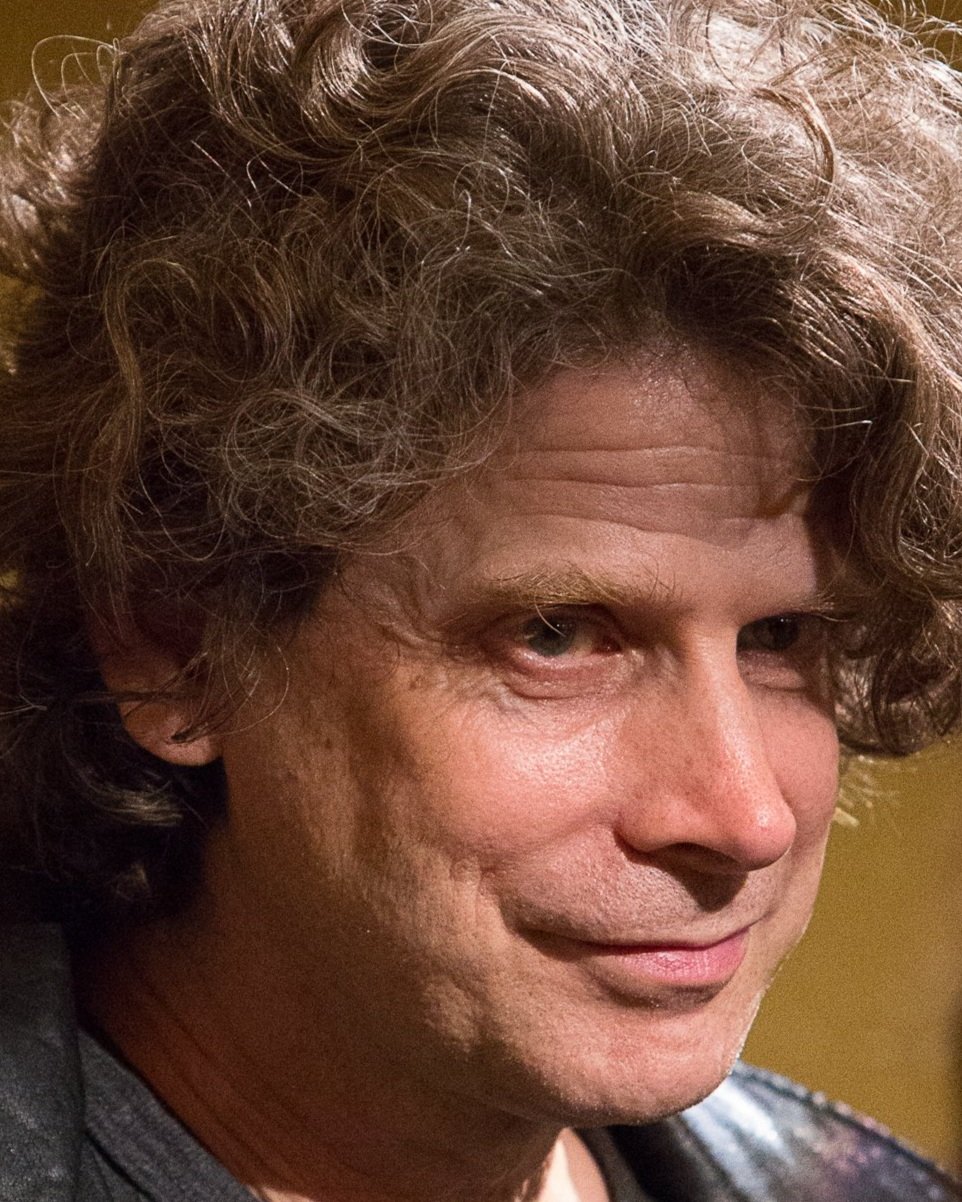
Twenty years ago, I took a class from Professor John Gerber, at UMass Amherst. Judging by this paper I just found, I must have been a pretty weird student!!
Sustainable Agriculture
Gerber-PLSOILIN 265
Andrew Laties -- 9-13-06
My Personal Understanding Of Agricultural Sustainability
My frames of reference, descriptive and analytical vocabularies, belief systems and future expectations are multiple, and mutually self-contradictory. Necessarily so, because the fire of individuated living energy self-referencing as “myself” has no ground, but is an interdependent aspect and expression of the present and historical universe. Provisional understandings are the essence of my awareness, and the basis for my action. Is my selfhood “sustainable”? Never, if this word implies an ever-renewing, desirable state of some thing essentially static. That is: if my wish is to live forever, always recognizably the same individual, then I’ve embraced a lie.
Similarly, any habitual use of the word “sustainability” that bases its assumptions on the desirability and attainability of eternally recurring stasis--psychological, social, ecological--is a flawed definition that will underpin a self-deceptive understanding.
Systems evolve in time. Information is irreducibly complex. Life is a transformative principle, and can appear to be simple, but living systems, moment by moment, do not engender simplicity in the world. Rather, as enacted, life is infinitely various and unpredictable, evading definition, relentlessly complex. All apparent systemic simplicity is a short-, medium-, or long-term transitional state. Even so-called bedrock principles, clear-cut proven ideas, well-tested techniques are profoundly conditional.
So there is no such thing as sustainability in any conventionally acceptable sense. That is: the word is freighted with an impossible self-contradiction, projecting an aspiration for eternal recurrance onto a universe that does not engage in repetition.
In the absence of any possible human or ecological desirably steady state, what is the hidden agenda of the word sustainability? And, from the perspective of myself, why do I embrace this particular lying formulation? What is the nature of the self-deception in which I engage when I permit myself to indulge in fantasies and actions that attempt to enact the impossible?
Dada. Agricultural sustainability is anti-art, refusing the deathly narrowness of calculated immediate maximum functional value as seen from the perspective of a single human observer. That is, agricultural sustainability refuses the viewpoint of homo economicus, the actor relentlessly seeking to maximize a specific system’s gain while minimizing that same system’s loss, while aggressively ignoring gains and losses in all the infinitely interlocking systems.
Agriculture, that eleven-thousand-year-old bastard of the hundred-thousand-year-older shamanic hunter-gatherer human collective, is the original human art, because self-conscious of its separateness from the larger natural present. Agriculture asserts human superiority and eminent domain.This lie underpins civilization. So, art is the first principle of our lives. Artifice, artificiality--perfection. The absolute. Agriculture’s relentless pursuit of maximum gain is the model on which the human firestorm of planetary transformation is predicated.
Sustainable agriculture is the inversion of this principle, arguing that the human species can change its direction. This is profoundly impossible: therefore, for myself (since my individual existence is similarly impossible), I embrace it.
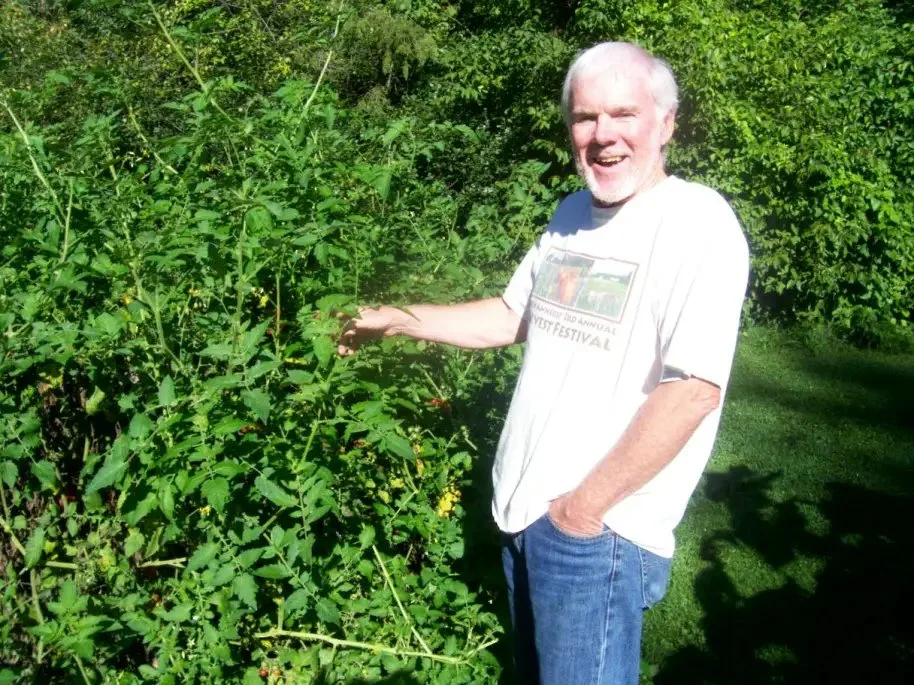
Professor John Gerber
