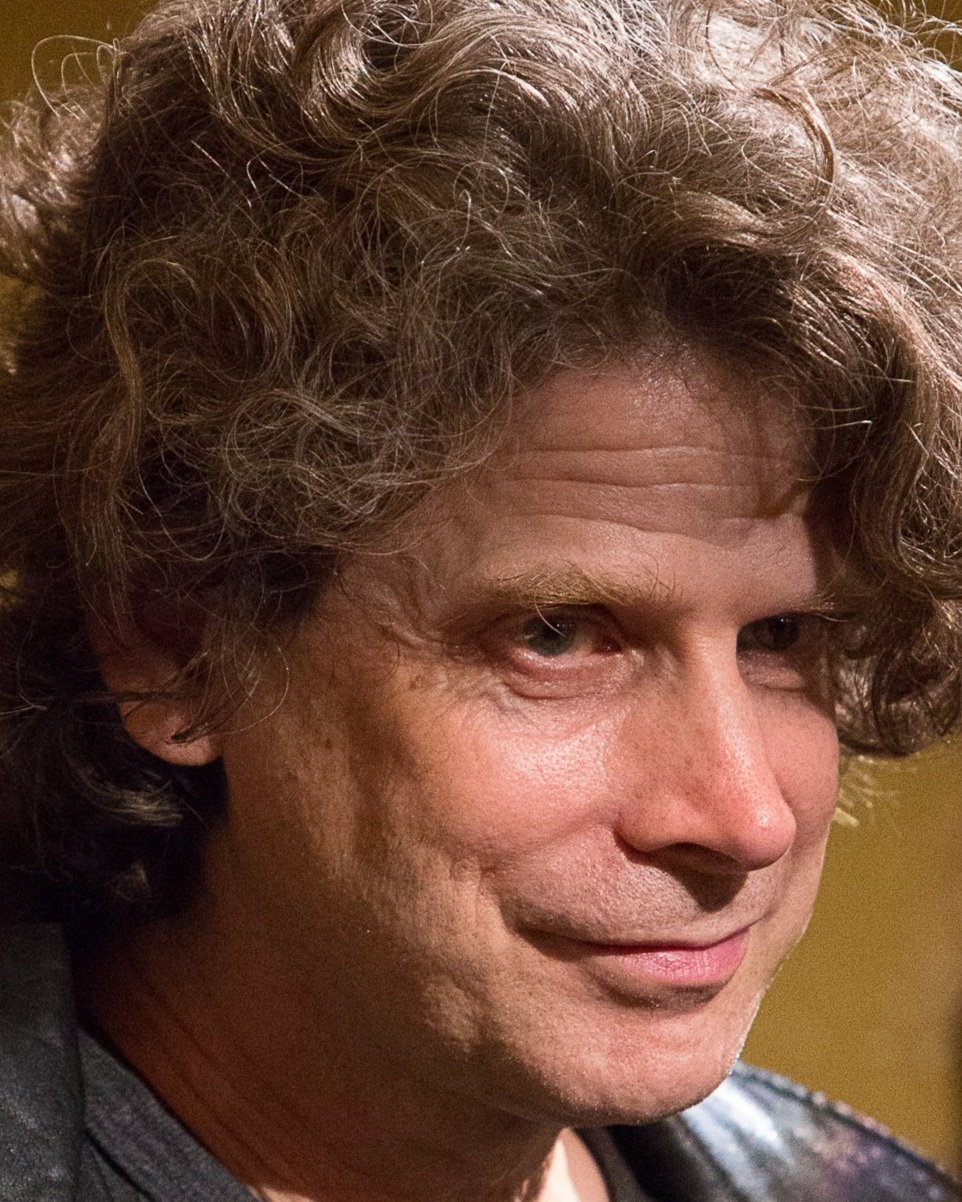
“You were in my school.”
Kids have been telling me this, because I visited eight elementary schools last week, accompanying Easton Book Festival’s visiting author, Emma Otheguy. Emma delivered eighteen half-hour assembly programs, reaching grades K through 5—and the Festival gave away 3,600 books—one for every student.
The logistics for this enterprise were guided by administrator Hector Bonilla, who at each assembly introduced Emma and me to the kids.
When I inquired of each group, “Have any of you been to Book and Puppet Company to buy books or see a puppet show?”—I consistently saw nearly half the hands go up.
These kids are clued in to the magic of books.
Nearly half the kids also raised their hands in answer to Emma’s rather different inquiry, “Does anybody here speak a language other than English, at home?”
These kids take for granted a world wider than “mainstream” English-language culture.
And that’s Emma’s area of expertise.
Not many children’s book authors have a Ph.D. in history. Emma’s dissertation focused on inheritance laws in 17th century Potosi, a silver-mining center that was once the wealthiest city in the world. Emma’s time-travel fantasy novels are deeply researched, as befits a history scholar. Her books transport kids to historical turning points where the entire future hangs in the balance.
Emma hooks her young readers with engaging characters and fast-moving plot, but the books have a purpose, which is, to get kids interested in history. And not the mainstream stuff included in the history textbooks.
For instance, her Cousins in the Time of Magic revolves around Mexico’s May 5, 1862 Battle of Puebla victory over the invading French army—a victory which benefited the Union in the American Civil War and led to U.S. Latinos first coalescing as an interest group, to celebrate a new Cinco de Mayo holiday.
Did you know about this turning point episode in the US Civil War? I didn’t. Yet it’s celebrated every year!
During Emma’s presentations, she alway flashed a few slides showing herself as a girl: Emma has been writing since she was a kid. Watching Emma in action now, I reflected on the time-travel element of this moment in the presentation.
Here before me stood Future Emma, explaining herself as a creation of Past Emma—and, then, describing the book she’d recently created, in which Future Cousins travel a hundred-fifty years into the Past, in order to explain the creation of a Future holiday: Cinco de Mayo.
Does the past create the future?
Or, does the future create the past?
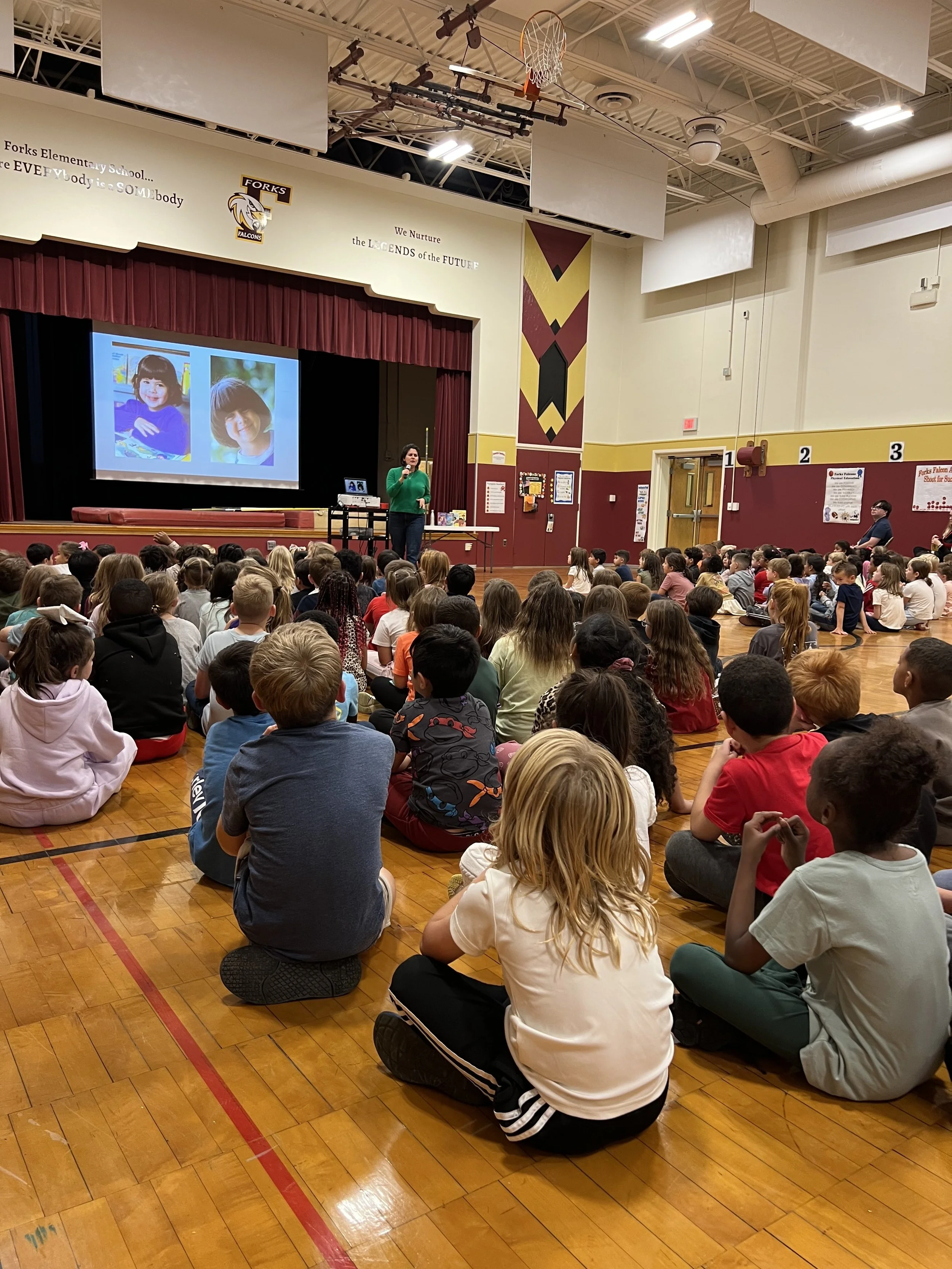
Future Emma Otheguy, in person; Past Emma Otheguy, on the screen.
