I Recommend “Nine Gates”
“What book have you been reading?” asked my tall young customer. We were chatting, at the cash register. As a bookseller, I’m used to avoiding a direct response, since I want to help such questioners find a book they themselves would like to read…and my personal reading choices usually don’t intersect. So, I’ll try answer with a book I once read, which I think that this customer would like. Also, sometimes the book I’m now reading is one that I don’t have a copy of to sell in the store. If I begin to talk about it, the customer might ask to buy a copy.
Well—today, even though I thought this person wouldn’t want to read my current book, and even though I didn’t have a copy in the store to sell, I just told him the truth. “I’m reading Nine Gates to the Chasidic Mysteries. It’s something I knew nothing about, and it’s completely surprising.”
“What kind of mysteries was it?” he asked.
“Chasidic. Mystical Jewish religion. Like, the Kabbala—the Zohar. The book was written in the mid-30s, by a guy who up and left his middle class mainstream Jewish family—they lived in Prague—and headed East to Galicia—rural Poland. He lived with the Chasidic Jews there, immersing himself, converting. After a while he came back to his family in the big city, but continued to live like a Chasid.”
“What’s a Chasid?”
“Yeah—I thought I knew about the Jewish religion—and when I go to Brooklyn on a Saturday and see men walking around in long black cloaks and broad-brimmed hats—I sort of figured I understood their beliefs. But I totally did not. In Chasidism, there’s Heaven and Hell, and the holy men go up to Heaven and come back down, regularly. And, there’s transmigration of souls: reincarnation. It’s like magic.”
“I never heard anything about that,” he said.
“Well, I like to read about religions of the world; history of religion. Somehow I never read about this particular religious sect though—which is funny, since I do go into Brooklyn a lot, and I see the Chasidic Jews walking around.”
***
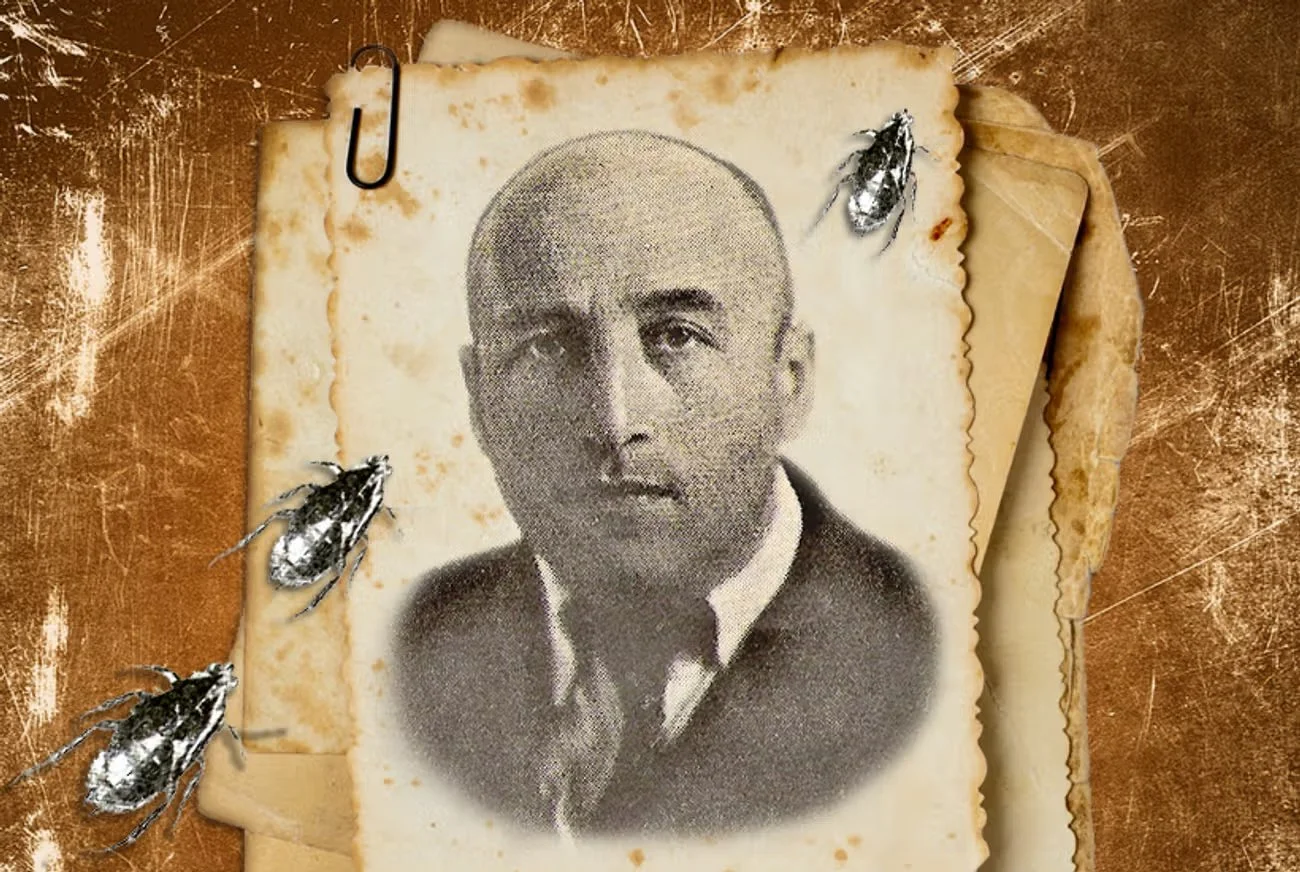
I bought Nine Gates six weeks ago at a bookstore in Vancouver. It’s filled with wonder-tales and miraculous characters. The volume includes a biographical sketch of the author—Jiri Langer—written by his older brother Frantisek. I don’t know why I never heard of this book—it’s one of these hard-to-find classics that’s just a great read. I’ve been talking about it a lot.
For instance: I really knew nothing about transmigration of souls as part of Judaism. Did you know that you needn’t feel bad about having been born into a generation when the Messiah is not arriving now? If you are an observant Jew—you will in the future be born in the Promised Land, into the generation when the Messiah does come. (This particular lifetime you are in now is merely a part of your soul’s larger and longer journey.)
***
When I was studying literary criticism fifty years ago, I had a professor who followed the New Criticism theory that the biography of the author does not matter. What’s important is the text. And I agree.
But…big brother Frantisek’s essay about little brother Jiri was very interesting. Especially the part about how Jiri was friends with Franz Kafka, and they used to take long walks together, and Jiri taught Hebrew to Franz. I love Kafka—and I wanted to learn more about this relationship. So…I started Googling.
Woweeeeeeee":
“Langer felt rejected by the Hebrew literary establishment, which he interpreted as a sign of their revulsion at undisguised homosexual references in many of his poems. Indeed, Langer wrote some of the most daring homoerotic poetry ever published in Hebrew, at a time when merely discussing such matters was considered shameful.”
—Yivo Encyclopedia. https://encyclopedia.yivo.org/article/429
“František’s retelling of Jiří’s coming-out-as-Hasid story is significant for another reason too. The primacy he afforded the story is telling, not for what it reveals about Mordechai Jiří (and certainly about František), but for what it hides. František constructed a hyperbolic narrative of his brother’s conversion to Hasidism, using the image of “coming out” to the family as Kafkaesque bug, to bury a far more troubling family secret: his brother was a homosexual. As far as I have been able to determine, František never mentioned his brother’s homosexuality in print; yet it is highly unlikely that he never discovered it given Langer’s engagement with the issue in Die Erotik der Kabbala and in his Hebrew poetry (others like Max Brod and Dov Sadan were also aware).”
—Shaun Jacob Halper, Mordechai Langer (1894-1943) and the Birth of the Modern Jewish Homosexual. https://escholarship.org/uc/item/5zz859g4#page-201
….Now: as for the question then of whether Franz Kafka and Jiri Langer were “just friends”—scholars think yes. Just friends.
“Why had Langer written his impassioned poem for Franz Kafka? Wolff tantalizes by proposing that Kafka may have been the unnamed love interest in Langer’s poems. As evidence she cites the long walks Langer and Kafka took at various times as reported by František. However, nothing in the poems, or in the biographies, supports the notion that Langer was romantically taken with Kafka, whom he’d met through their mutual friend, Max Brod, in 1915. At that time, both Brod and Kafka were deeply interested in east European Yiddishkeit, especially in mystical Hasidism, and they hoped that Langer could open a window into that world.”
“In September of that year, Langer led Brod and Kafka on a field trip to a dingy inn in a suburb of Prague where the rabbi of Grodek and his followers were having a Sabbath meal. In his diary, Kafka recorded his mixed reactions. He was horrified by the rabbi’s lack of hygiene (“Scratches his beard, spits on the floor, reaches into the food with his fingers … ”) but admired his “purity” (“When he rests his hand on the table, you see … a whiteness you could have only have seen in your childhood imaginings”). Brod reports that on the walk home, Kafka was disparaging, likening the experience to “being among a wild African tribe. Blatant superstition.””
“A similar reaction was elicited the following year when Kafka visited Marienbad and met up with Langer, who was taking part in the daily rituals of the vacationing Belzer Rebbe and his disciples. In a long letter to Brod, Kafka describes the rabbi as “the kind of sultan I used to admire as a child in the fairy-tale illustrations by Doré.” The disciples, he writes, have “that look of calm, happy confidence … ” But later in the letter he likens the rabbi’s discourse to “the banal chatter and questions of idle monarchs.” Kafka writes: “Langer seeks, or suspects, a deeper meaning in all of this; I think the deeper meaning is that there is none.””
…“Kafka’s overwhelming passion was language and his true friendship with Langer was based on their mutual love of Hebrew. In the spring of 1917, Kakfa decided to learn Modern Hebrew; he obtained a copy of Moses Rath’s Hebrew Grammar and Reader for Schools and Self-Instruction, the recommended textbook of the day, and began to diligently work his way through the prescribed lessons. Then, in the autumn of 1918, he asked Langer to give him private lessons; Langer, who was impressed with his student’s progress, would later describe Kafka’s Hebrew as “fluent.””
--Kenneth Sherman, Kafka’s Gay, Hasidic Hebrew Teacher. https://www.tabletmag.com/sections/arts-letters/articles/kafka-langer
***
Well, there you have it. I love a good book because it takes me down a road I never would have taken otherwise. I certainly recommend Nine Gates to the Chasidic Mysteries. And yes, I’m picking up some copies to sell in the bookstore.